

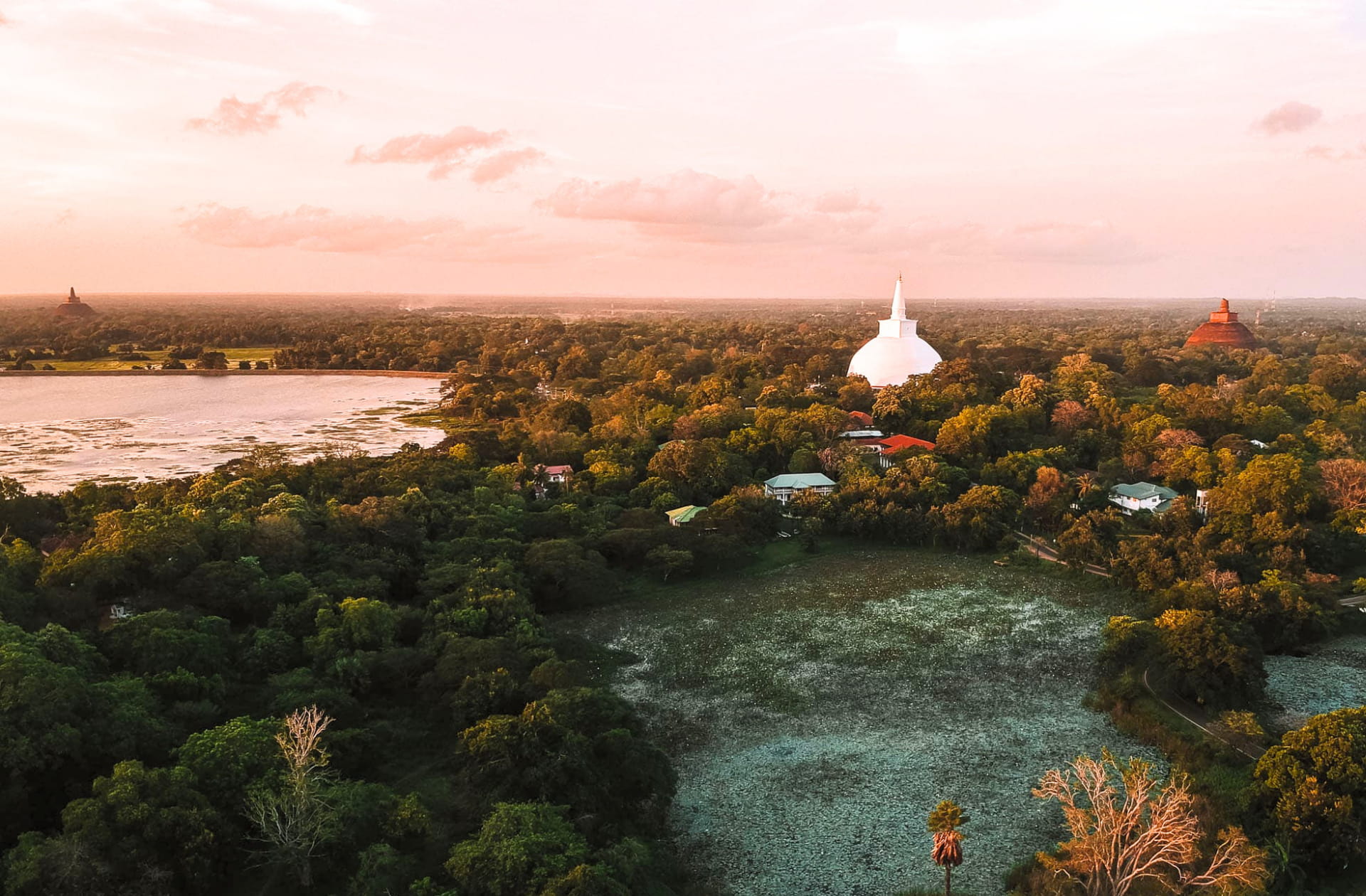
Anuradhapura sits within the vast, flat plains of Sri Lanka's north-central dry zone, operating as the spiritual and historical anchor of the island's ancient past. Unlike the compact, colonial footprint of Galle or the cool density of the central highlands, Anuradhapura is an environment defined entirely by monumental scale and distance. It was the first capital of Sinhalese royalty, remaining the centre of power for over a millennium, and leaving behind a sprawling landscape of towering brick stupas, carved granite pillars and vast monastic ruins.
For many travellers, Anuradhapura represents a necessary historical excursion. Yet to treat it purely as an archaeological site is to misunderstand its identity. It is a living, actively venerated sacred city. Monks walk between ancient columns, thousands of pilgrims clad in white arrive daily to leave offerings of lotus flowers and the ringing of ceremonial drums provides a constant auditory backdrop to the heavy dry-zone heat.
HistoryThe First Capital
Anuradhapura is known for holding some of the most profound ancient monuments in the Buddhist world and serving as the northern apex of Sri Lanka's Cultural Triangle. A designated UNESCO World Heritage Site, it is renowned for the Jaya Sri Maha Bodhi, the oldest historically documented living tree on earth, alongside colossal brick stupas such as Jetavanaramaya and Ruwanwelisaya. It introduces travellers to early Sinhalese mastery of masonry and complex hydraulic engineering.
Located far inland and insulated from the moderating breezes of the coast, Anuradhapura is subject to the intense heat and sharp seasonal rains of the dry zone. Reaching the city involves a journey deep into the plains, passing scattered villages, open farmland and wide stretches of tropical scrubland. This geographic reality matters profoundly when visiting. Anuradhapura is not a concentrated urban environment or a single temple complex to be navigated in a passing afternoon.
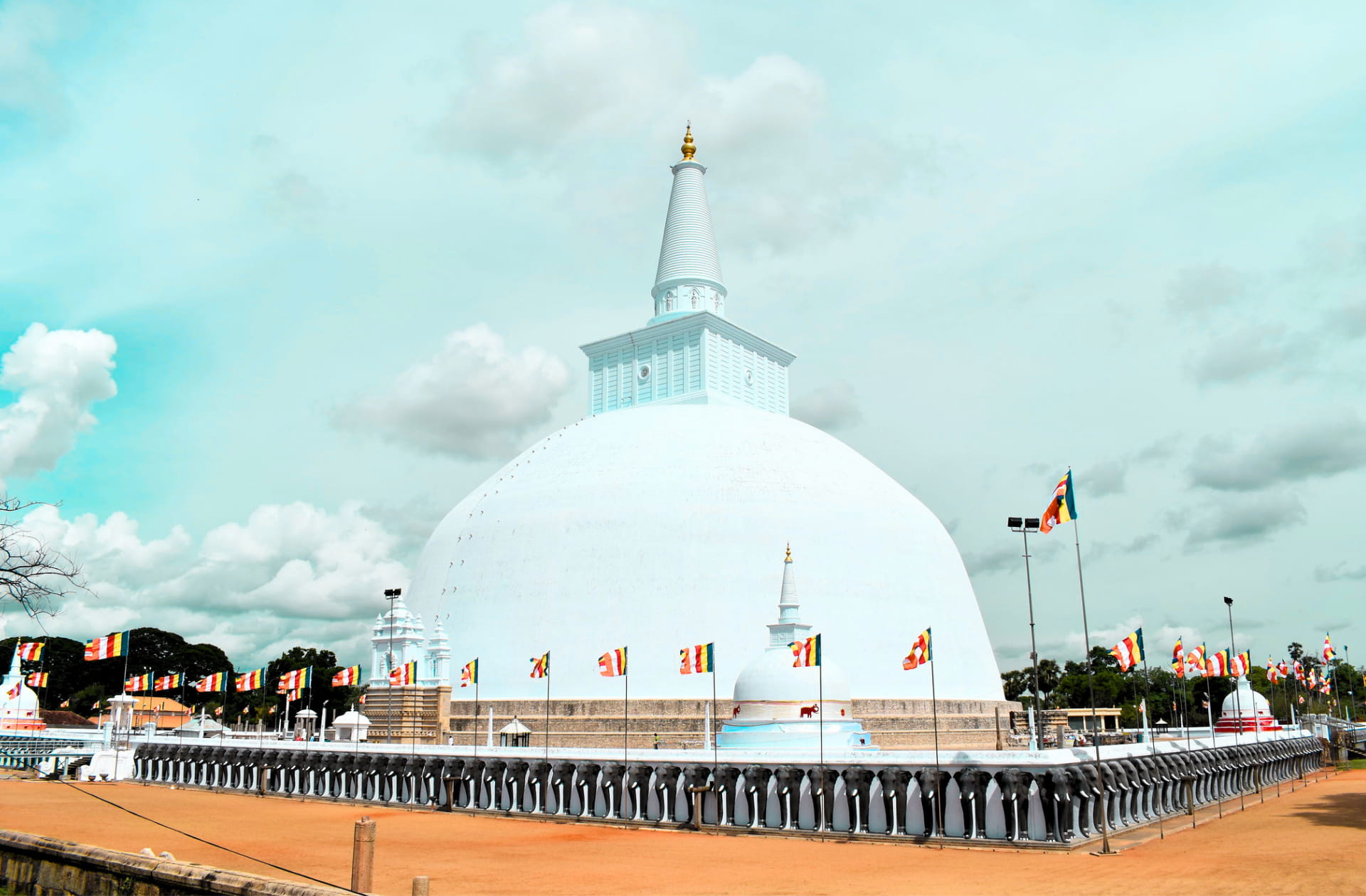
The sacred sites, ruins and ancient bathing pools are dispersed over dozens of square kilometres. Exploring this ancient capital requires navigating by vehicle or bicycle along shaded avenues that connect the different monastic quadrants, demanding an itinerary directed completely by the pace of the equatorial sun. The defining architectural features of Anuradhapura are the immense, dome-defined stupas that break the flat horizon. Structures like the third-century Jetavanaramaya were once rivalled in height only by the pyramids of Giza. They are constructed not from solid rock, but from tens of millions of fired bricks.
This physical weight dominates the experience of the city. Approaching these monuments requires walking across vast stone courtyards that radiate heat. The stupas create a distinct visual pace across the dry zone landscape, acting as immense physical representations of both religious devotion and severe architectural ambition. Anuradhapura could not have existed for centuries without profound ecological mastery.
Because the northern dry zone receives limited rainfall outside the monsoon season, early engineers carved massive artificial reservoirs into the plains to catch and distribute water to the city and its agriculture. The ancient tanks of Tissa Wewa, Nuwara Wewa and Basawakkulama still function today, acting as vast inland lakes. Beyond their agricultural necessity, they soften the arid landscape entirely. Their banks attract rich birdlife and provide deep, shaded tree canopies that offer critical relief for both pilgrims and travellers retreating from the intense afternoon glare.
Because the environment is so deeply defined by exposure to heat, hospitality in the Anuradhapura region leans entirely into the concept of shaded sanctuary. Boutique stays and upscale nature resorts on the edge of the sacred city are designed primarily to cool the environment. Design here focuses on heavy timber roofs, deep verandahs, open pavilions and mature indigenous forests. The strongest properties operate as thick, green envelopes that stand in direct opposition to the exposed, sun-bleached ruins.
In destinations like the southern coast, properties serve as immediate launch points to the beach. Around Anuradhapura, the hotel acts as an essential recovery space. Travellers select accommodation here to establish a quiet base, venturing out to the monuments at dawn, retreating to an air-conditioned room or courtyard pool for the midday peak and venturing out again as the long shadows of the late afternoon settle across the stupas. Anuradhapura is most frequently engaged as the formal beginning or northern terminus of a Cultural Triangle itinerary.
Travellers typically arrive here early in their trip after heading inland from Colombo, treating it as the opening chapter of the island's history before moving south towards the rock fortress of Sigiriya, the cave temples of Dambulla and the central highlands of Kandy. This placement makes it an incredibly important cultural baseline. By absorbing the colossal scale of Anuradhapura early in a trip, travellers acquire a framework for understanding the history, Buddhist rituals and architectural lineage they will encounter across the rest of the island.
Anuradhapura requires respect, timing and physical endurance. The sacred area is enormous and many sections remain active sites of profound religious significance. Visitors are strictly required to cover their shoulders and knees, regardless of the intense heat, out of respect for local Buddhist practice. Furthermore, shoes cannot be worn near the stupas and sacred trees. Travellers must prepare for the physical reality of walking barefoot across stone paving that absorbs equatorial heat rapidly by late morning.
Unrushed planning is critical. Attempting to speed through the scattered monuments at noon is an exhausting error. The city rewards those who dedicate multiple quiet hours at first light and those who understand that witnessing thousands of pilgrims participating in ancient, uninterrupted ritual is as compelling as the stone structures themselves. This overview introduces Anuradhapura through its geographic scale, its ancient engineering and its deep sacred identity. For a more detailed look at the northern edge of the Cultural Triangle, including specific insights on navigating the sacred city, design-led stays nearby and managing the dry zone pace, step inside the LUXESIO magazine.
The full edition explores Anuradhapura through its living heritage, quiet