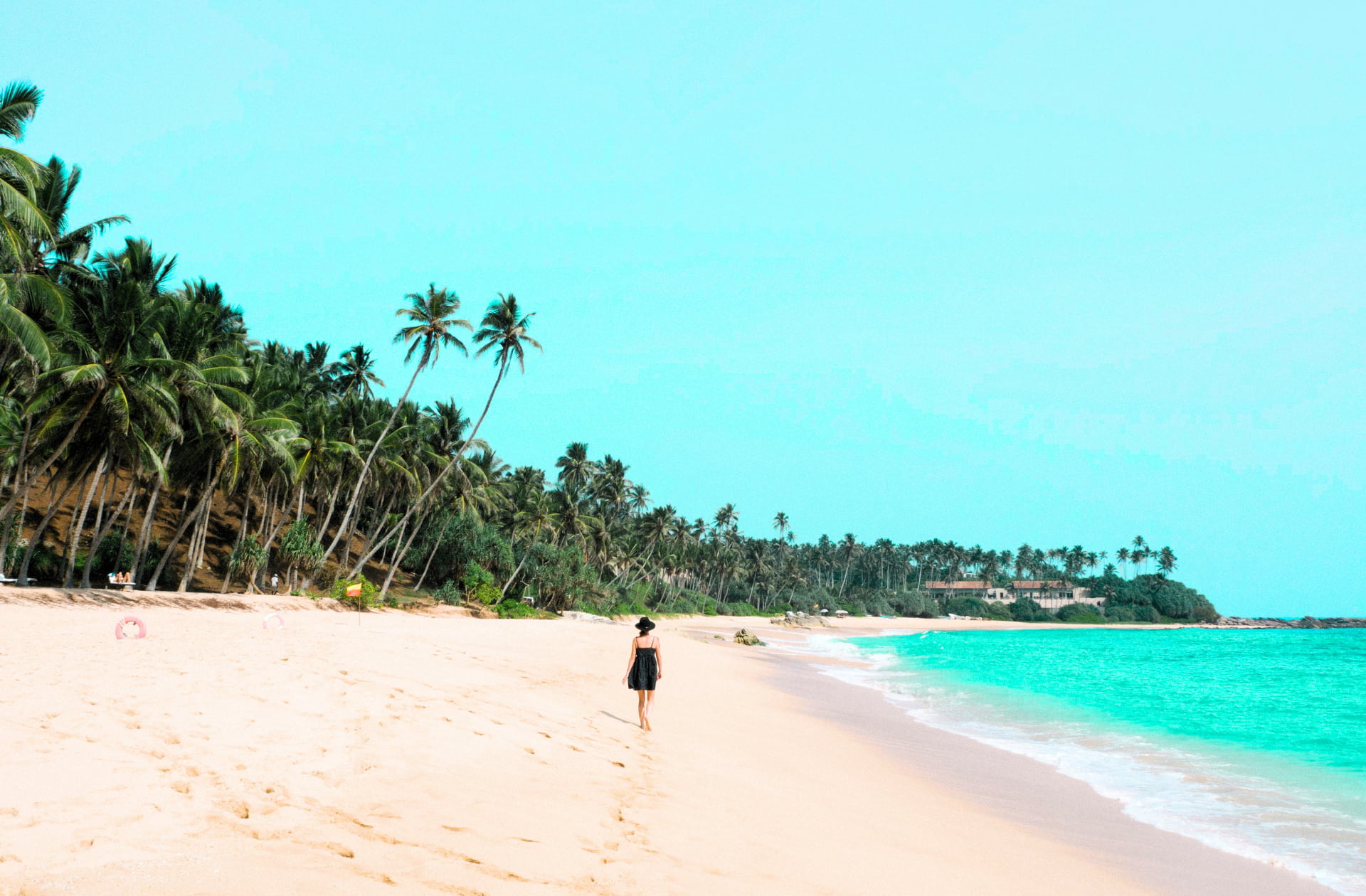
Tangalle sits on the deep southern edge of Sri Lanka. It marks the point where the island’s heavily developed southwest coast ends and a wilder landscape begins. It is one of the island’s most compelling coastal environments. This region is defined by a stretch of deep bays, working fishing harbours, inland lagoons and lower-density hospitality. For many travellers, Tangalle is synonymous with isolation and luxury. Yet the town’s character is defined by more than high-end properties. Its importance lies in the physical scale of the coastline. The proximity to the dry zone and a pacing that demands a complete departure from the checklist travel of busier surf towns further west play crucial roles.
Tangalle is known for its expansive shorelines and its reputation as the south coast’s most architecturally significant retreat. Set on the island's deep southern edge, it is home to design-led boutique hotels, working fishing harbours and significant coastal ecosystems. It forms a natural coastal pause for travellers moving between the southern surf towns and the eastern wildlife reserves. Understanding Tangalle requires a shift in perspective. Tangalle is located in Sri Lanka’s Southern Province. It is accessed by following the coast road past the busier hubs of Galle, Ahangama, Weligama and Matara. As the road moves east, the density of development thins considerably. This physical shift matters profoundly. Tangalle is not a compact surf village. It is a vast coastal district where the Indian Ocean carries more weight. The geography begins to shift towards the arid scrublands of the deep south. Within this open landscape are distinct coves, wide beaches, agricultural hinterlands and a pace dictated entirely by the sun and the tide.
GeographyA Heavier Ocean
The coastline in Tangalle behaves differently than it does in the sheltered bays of the southwest. The beaches are wide. The sand is coarse. The ocean is often visibly stronger. Steep drop-offs and heavy currents make formal swimming difficult in many areas. This power is part of Tangalle’s identity. The ocean here is an atmospheric presence rather than simply a recreational one. It shapes the architecture of the stays, the layout of the dining spaces and the auditory backdrop of the entire region. Listening to the crash of the waves becomes a meditation. It acts as a constant reminder of the raw natural forces at play.
As you walk along the shore, the sheer scale of the environment becomes apparent. There are no crowded lineups of surfers. There are no endless rows of beach bars blasting music. Instead, there is space. There is space to breathe, space to think, space to simply exist in relation to the vastness of the Indian Ocean. The salt hangs heavy in the air. It coats the palm fronds and the lime-washed walls of the nearby villas. In the early morning, local fishermen pull their brightly coloured boats onto the sand. This is a daily ritual that has remained unchanged for generations. They mend their nets in the shade. Their voices carry over the sound of the surf. It is a scene of quiet industry completely detached from the tourism that exists on the periphery.
EcologyThe Lagoon and Inland Shift
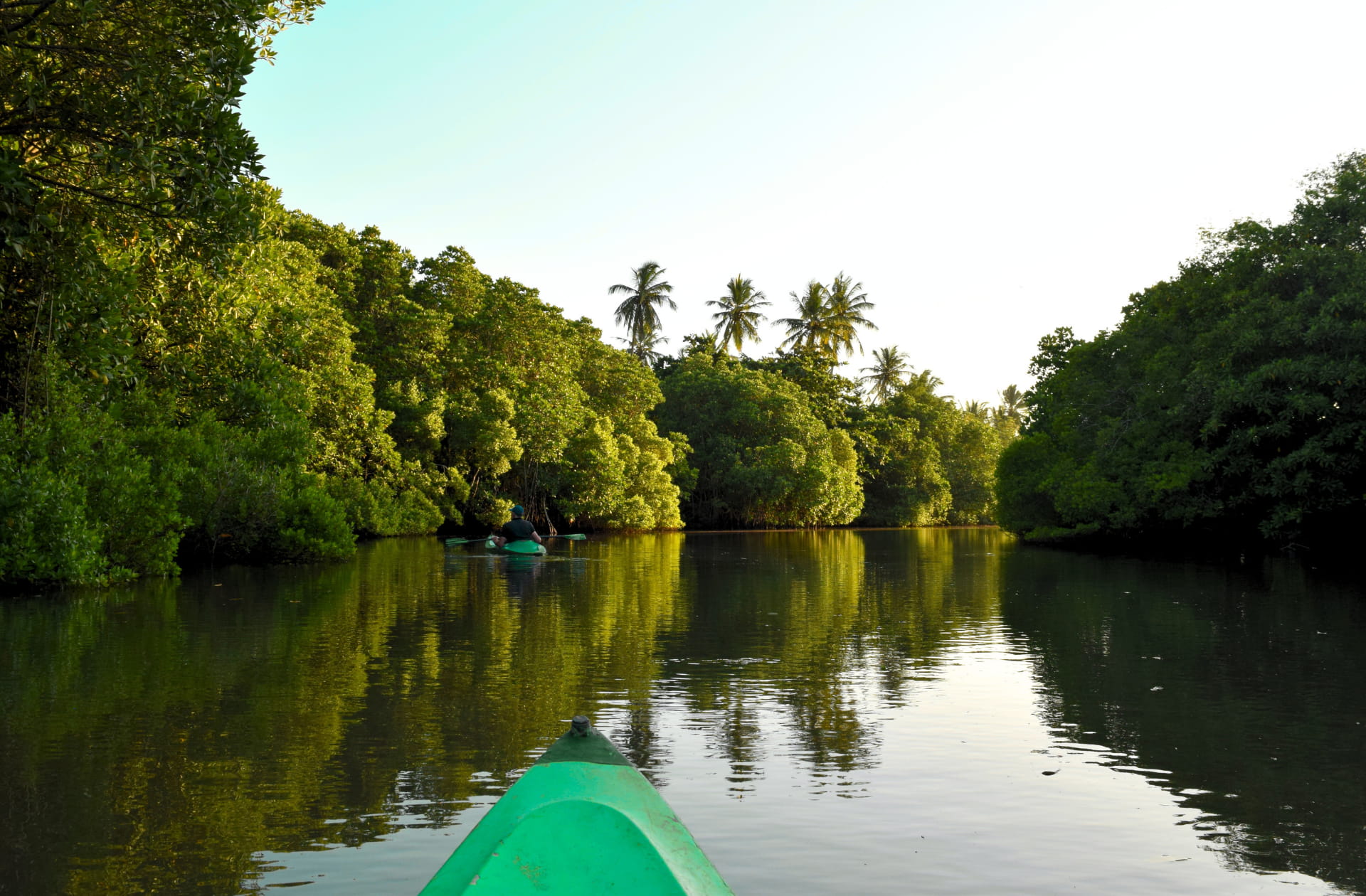
Tangalle’s environment is not limited to the ocean. Just inland, the landscape gives way to the Rekawa Lagoon, intricate mangrove systems and dense palm forests. This brackish interior adds an important ecological layer to the town. Travellers moving slightly away from the beachfront will find an environment defined by waterbirds, local agriculture, quiet village roads and the distinct transition from the wet zone to the dry zone. The air here feels different. It is less heavy with salt and more laden with the scent of damp earth and tropical foliage.
Navigating the lagoon in a small boat or kayak exposes a secluded world. Monitor lizards sun themselves on the muddy banks. Kingfishers dart between the mangrove roots. The water is still. This presents a stark contrast to the turbulent ocean just a few hundred metres away. Local farmers tend to small plots of land. They grow vegetables and spices that eventually find their way into the kitchens of the nearby retreats. This agricultural hinterland is vital to the local economy. It provides a sense of grounding. It reminds visitors that Tangalle is a living community, not just a backdrop for high-end hospitality. The connection to the land is palpable. It offers a deeper understanding of the region beyond its pristine beaches.
DesignArchitectural Stays and Tropical Retreats
Because the physical environment of Tangalle is so vast and the sun so intense, the architecture of the region leans heavily into concepts of retreat. Tangalle holds some of the island’s most important tropical modernist structures and high-end boutique properties. Design here focuses on deep shade, cross-ventilation, limewashed walls, vast courtyards and framing the ocean from a distance. The best properties in Tangalle act as enclosed sanctuaries. They draw a line between the heat of the deep south and the cool quiet of the interior.
These architectural marvels are designed to respect the climate rather than fight it. Roofs are pitched high to allow hot air to escape. Deep eaves provide shelter from sudden tropical downpours. Polished concrete floors remain cool underfoot. Slatted wooden screens filter the harsh midday light. The boundaries between indoor and outdoor spaces blur. This allows the ocean breeze to flow freely through the living areas. Every design choice is intentional. They aim at creating an environment of profound stillness and relaxation. In busier coastal towns, the hotel is often