Kandy is often first understood through its relationship with the Temple of the Sacred Tooth Relic. Yet the city holds a meaning that extends far beyond a single site. Its true importance lies in the relationship between kingship, Buddhist devotion, Kandyan cultural identity, ceremonial life and the landscape that binds the city together. Set within Sri Lanka's central highlands, Kandy stands as the last royal capital of the island and remains one of its most vital cultural centres. It is a city where history is lived daily through ritual, architecture and the natural environment.
The city occupies a crucial position within the island's geography. It serves as a cultural hinge between the ancient kingdoms of the Cultural Triangle to the north and the cooler elevations of the hill country to the south. Travellers often arrive here after exploring Sigiriya or Dambulla, finding themselves in a place that feels entirely distinct from the dry zone plains. This elevated setting is not merely scenic. It provides a strategic isolation that allowed the Kandyan kingdom to preserve its independence, culture and traditions long after the coastal regions fell under foreign influence.
HistoryThe Last Royal Capital
The historical weight of Kandy stems from its enduring role as the final bastion of the Sinhala kings. Historically referred to as Senkadagalapura, the city developed into a powerful centre of royal authority, Buddhist patronage and cultural pride. While the Portuguese and Dutch established footholds along the coast, the Kingdom of Kandy maintained its sovereignty for centuries. The rugged terrain formed a natural fortress that protected the city from colonial expansion. This long period of independence gave Kandy a symbolic resonance that remains deeply intertwined with concepts of national identity, religious continuity and royal legacy.
The formal conclusion of the independent Kandyan kingdom occurred with the signing of the Kandyan Convention in 1815, marking a profound political transition as British rule was extended over the central highlands. Despite the loss of political autonomy, Kandy never lost its cultural supremacy. The city retained its sacred identity, anchored primarily by the ongoing presence of the Temple of the Tooth and the continuation of the rituals associated with it. Today, the significance of Kandy is defined by this multi-layered history where royal ambition, deep religious devotion and contemporary urban life coexist within a single, hill-bound city.
Sacred HeritageThe Temple of the Tooth
The Temple of the Sacred Tooth Relic, known locally as Sri Dalada Maligawa, forms the sacred core of Kandy. It houses the relic traditionally believed to be the tooth of the Buddha, making it one of the most venerated pilgrimage sites in the Buddhist world. The presence of the relic has historically carried profound religious and political implications. In Sri Lankan tradition, the possession of the sacred tooth was intrinsically linked to the legitimacy of the ruling monarch. This inseparable connection explains why the temple complex was built within the immediate precincts of the former royal palace. It is a landscape where religious devotion and royal authority were historically fused into a single expression of power.
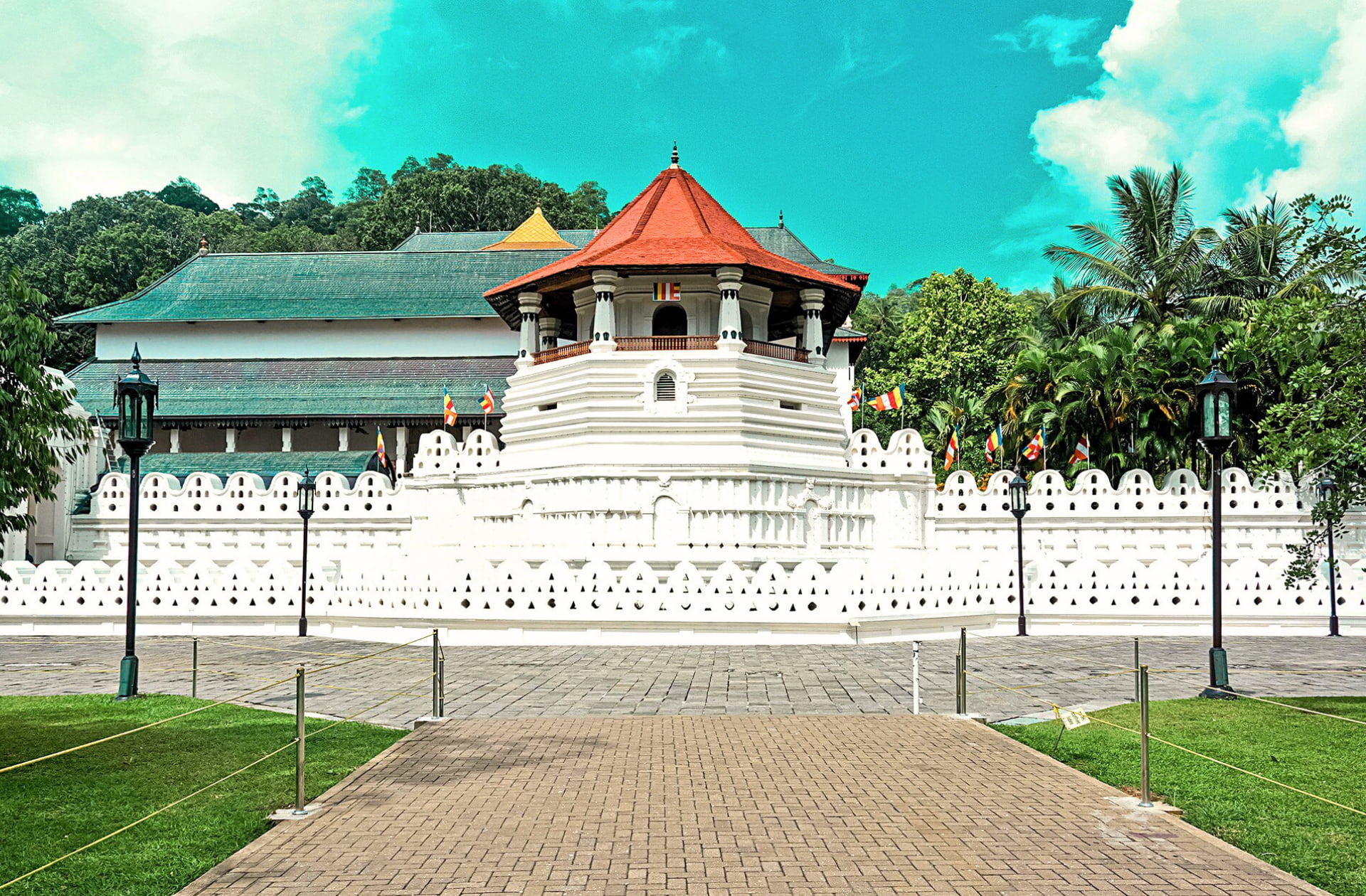
Visiting the Temple of the Tooth requires an understanding of its active, living nature. It must be approached with the respect owed to a major centre of worship rather than viewed merely as a historical attraction. From dawn until dusk, the temple is filled with devotees who arrive to make offerings of lotus flowers, light oil lamps and participate in the daily rituals known as theva. The atmosphere inside the complex is defined by the rhythmic beating of traditional drums, the scent of jasmine and the continuous movement of pilgrims. Cultural sensitivity is essential here, demanding modest dress and an awareness of the sacred rhythms that dictate temple life.
LandscapeKandy Lake and the City
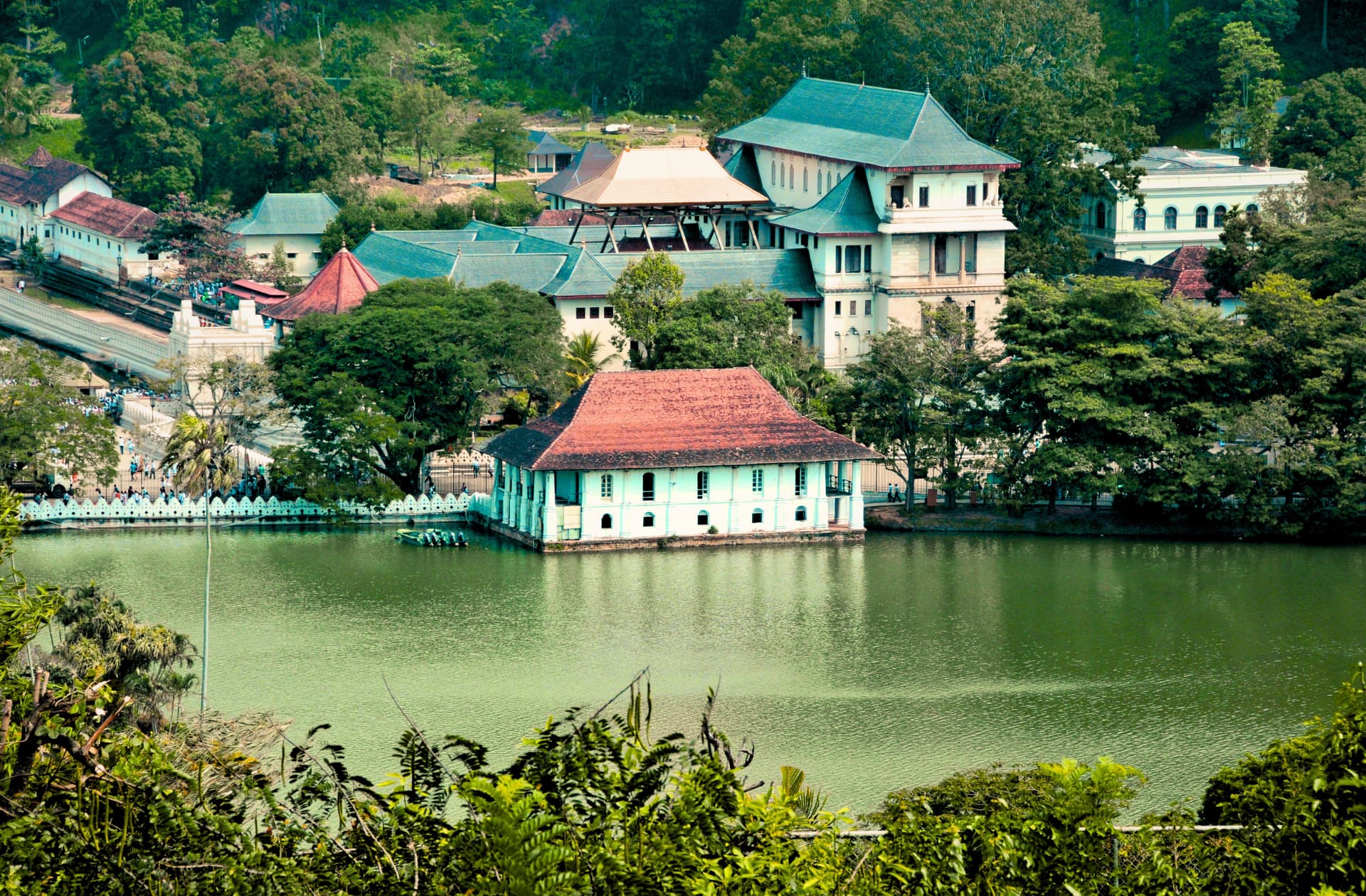
Kandy Lake gives the city much of its distinctive spatial character. Positioned directly adjacent to the Temple of the Tooth, the lake softens the intensity of the surrounding urban grid and creates a calm visual centre amidst the dense city streets. The lake is more than a scenic addition. It fundamentally defines how Kandy feels to those who walk its perimeter. The temple quarter, the busy commercial streets and the steep residential hills are all oriented in relation to the water. At different hours of the day, the lake reflects the changing light, offering a necessary contrast to the noise of the traffic nearby.
Beyond the lake, the surrounding hills rise sharply, completely enclosing the city basin. This topography is central to Kandy's identity. It is a place that feels simultaneously urban, sacred and distinctly highland. The architecture scattered across these hills reflects the city's complex past, with traditional Kandyan roofs sitting alongside colonial-era bungalows and modern structures. Exploring the narrow roads that climb up from the lake provides sweeping views over the temple complex and the city centre, revealing the true density and scale of this historic settlement.
CultureThe Esala Perahera
The ceremonial importance of Kandy reaches its absolute peak during the Esala Perahera, an annual procession dedicated to the Sacred Tooth Relic. This event is a spectacular convergence of Buddhist ritual, traditional Kandyan drumming, vibrant dance performances, torchlight displays and elegantly adorned elephants. The Perahera is arguably the most significant religious and cultural festival in Sri Lanka. It should be understood not merely as a colourful parade but as a profound expression of devotion, historical continuity and the sacred identity of the city itself. The procession reaffirms Kandy's role as the ceremonial heart of the island.
Kandy functions best for the traveller when treated as a place requiring pause rather than a fleeting stopover. The city is culturally dense and occasionally chaotic, demanding time to peel back its layers. Understanding Kandy means looking past the immediate traffic of the central streets and engaging with its history, its living traditions and its beautiful surrounding landscape. It is a city that rewards context and patience.