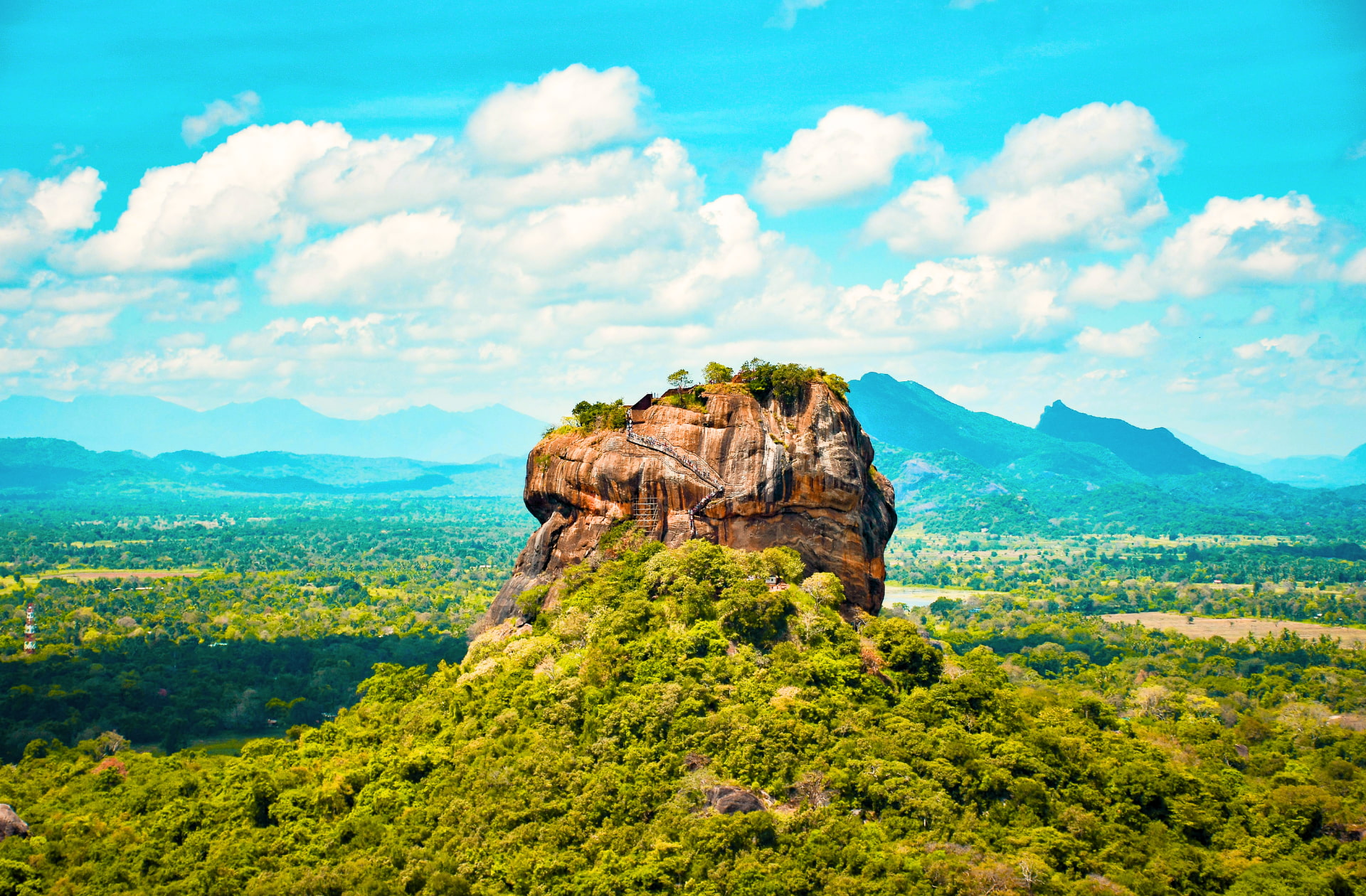
Rising above the plains of Sri Lanka's Cultural Triangle, Sigiriya remains one of the island's most significant historical landmarks. The ancient rock fortress brings together royal history, urban planning, art and landscape design above the surrounding plains. Often referred to as Lion Rock, the site was developed during the reign of King Kashyapa I in the fifth century CE. The king's name is also commonly rendered as Kassapa in archaeological references. Today, Sigiriya is visited for its frescoes, gardens, mirror wall and summit ruins.
Unlike a conventional fortress alone, Sigiriya exposes how architecture, water engineering and landscape planning were integrated into a single elevated citadel. The surrounding gardens, terraces and boulder formations remain as important to the experience as the rock itself. It stands as evidence of ancient ambition and an obsessive quest for security. The monumental scale of the complex requires visitors to slow down and observe how every element of the natural terrain was adapted for royal use.
HistoryThe Royal Citadel
Sigiriya became the royal capital during the reign of King Kashyapa I between 477 and 495 CE. According to historical chronicles, Kashyapa established his palace atop the rock after seizing power from his father King Dhatusena. Fearing retaliation from his half-brother Moggallana, the new ruler sought a fortified position that could withstand extended sieges while functioning as a palace of unparalleled beauty.
ArchitectureWater and Boulder Gardens
The gardens surrounding Sigiriya form an essential part of the site rather than a secondary feature. Symmetrical pools, waterways and landscaped terraces reveal an advanced understanding of hydraulic engineering and spatial planning. The elaborate network is divided into distinct sections. The first consists of a miniature water garden with interconnected pebble-lined pools. The second features fountain gardens, where underground terracotta pipes supply water under pressure to create working fountains. During the rainy season, parts of the water garden system still function today, channeling water with remarkable precision.
The Boulder Gardens, positioned closer to the ascent, create a quieter transition between the lower grounds and the rock itself. Large natural stone formations are woven into pathways, terraces and sheltered spaces, reinforcing the relationship between architecture and landscape throughout the complex. Monks once meditated in the caves beneath these boulders before the arrival of the king.
ArtThe Frescoes and Mirror Wall
Partway through the ascent, a sheltered rock face holds the famous Sigiriya frescoes. These paintings, created during the reign of King Kashyapa, depict female figures rendered with remarkable delicacy and colour. Originally, the entire western face of the rock was painted, creating a massive picture gallery visible from the plains below. Although many frescoes have been lost over time, the surviving paintings remain among Sri Lanka's most important examples of ancient art. Scholars continue to debate their meaning and symbolism. Some argue they represent the queens of the royal court, while others suggest they depict celestial nymphs rising from the clouds.
One of Sigiriya's most distinctive features is the Mirror Wall, originally polished to such a high sheen that it was said the king could see his reflection while passing beside it. The wall was constructed from brick masonry and covered in a highly polished white plaster. Today, the wall is especially significant for its ancient inscriptions. Visitors between the eighth and tenth centuries left poems, reflections and observations etched into the surface, creating one of the earliest surviving examples of visitor commentary in South Asia. These inscriptions provide rare insight into how Sigiriya was experienced centuries ago by ancient travellers.
AscentThe Lion Gate and Summit
The site takes its name from the enormous lion structure that once guarded the final ascent to the summit. Today, only the giant stone paws remain, but they continue to suggest the scale of the original entrance. The imposing paws frame the final staircase, instilling a sense of awe in anyone who approaches. Visitors climb through the Lion Gate before reaching the final metal staircase leading towards the summit plateau.
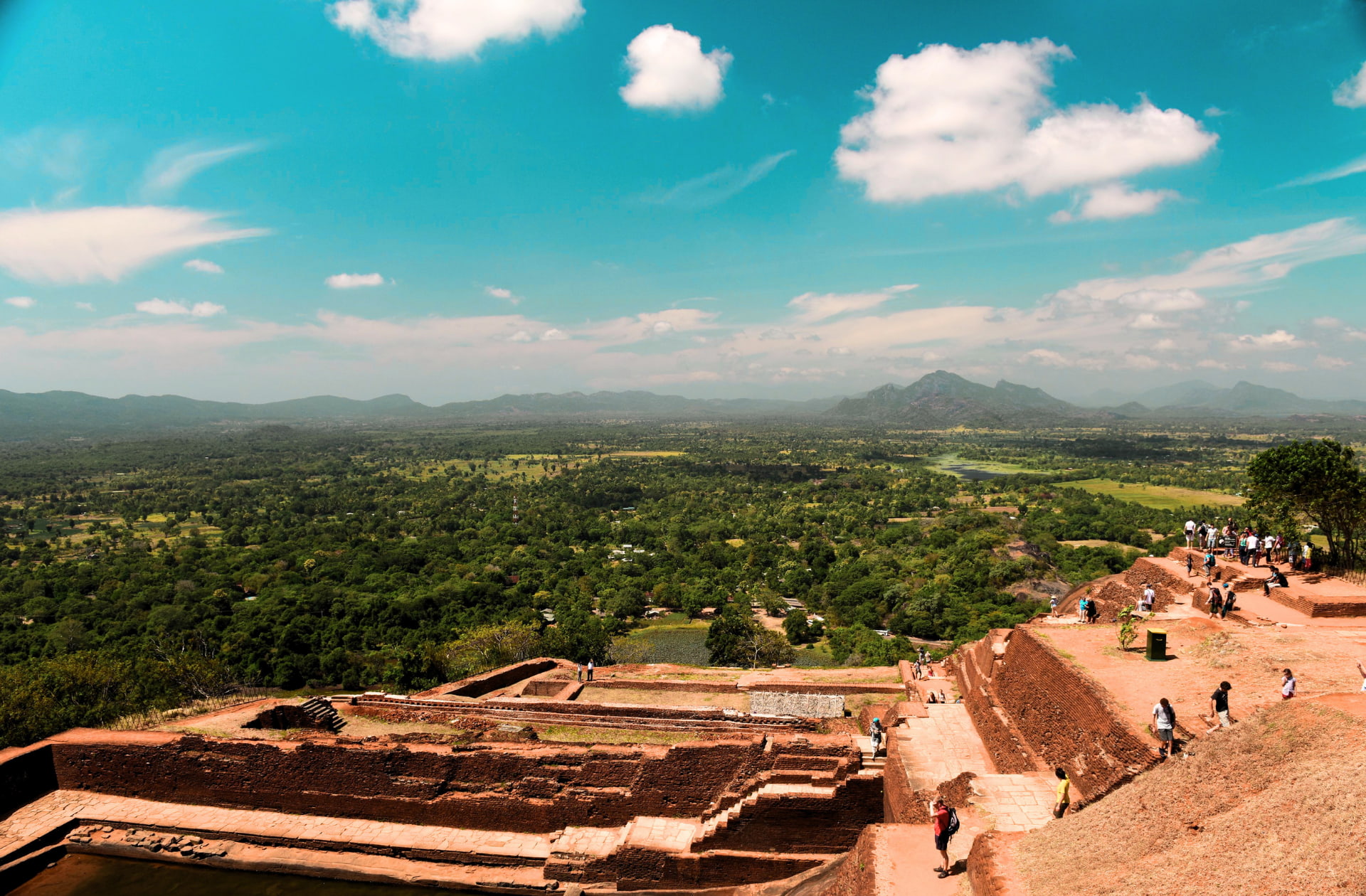
The summit covers roughly one and a half hectares, featuring the remains of palace buildings, a large rock-hewn pool and panoramic vistas of the surrounding dry zone. The layout of the summit palace is terraced to follow the natural contours of the rock. At the very top lies the royal palace, flanked by lower terraces that once housed pavilions and living quarters. The large bathing pool, carved directly into the living rock, was likely used by the king and his court.
ContextThe Cultural Triangle
Beyond the fortress itself, Sigiriya sits within one of Sri Lanka's most historically important regions. Reservoir systems, ancient capitals, cave temples and monastic sites remain spread across the surrounding plains, making the area significant far beyond a single landmark. The nearby Pidurangala Rock offers a contrasting perspective, presenting a rugged climb that rewards hikers with an uninterrupted view of Sigiriya rising above the canopy.
For many travellers, Sigiriya becomes not only a climb or a historical stop but an introduction to the broader scale of Sri Lanka's ancient civilisation. The integration of nature and monumental construction sets a precedent for architectural endeavours across the island. The journey through the Cultural Triangle provides essential context for understanding the cultural and historical depth of the region.
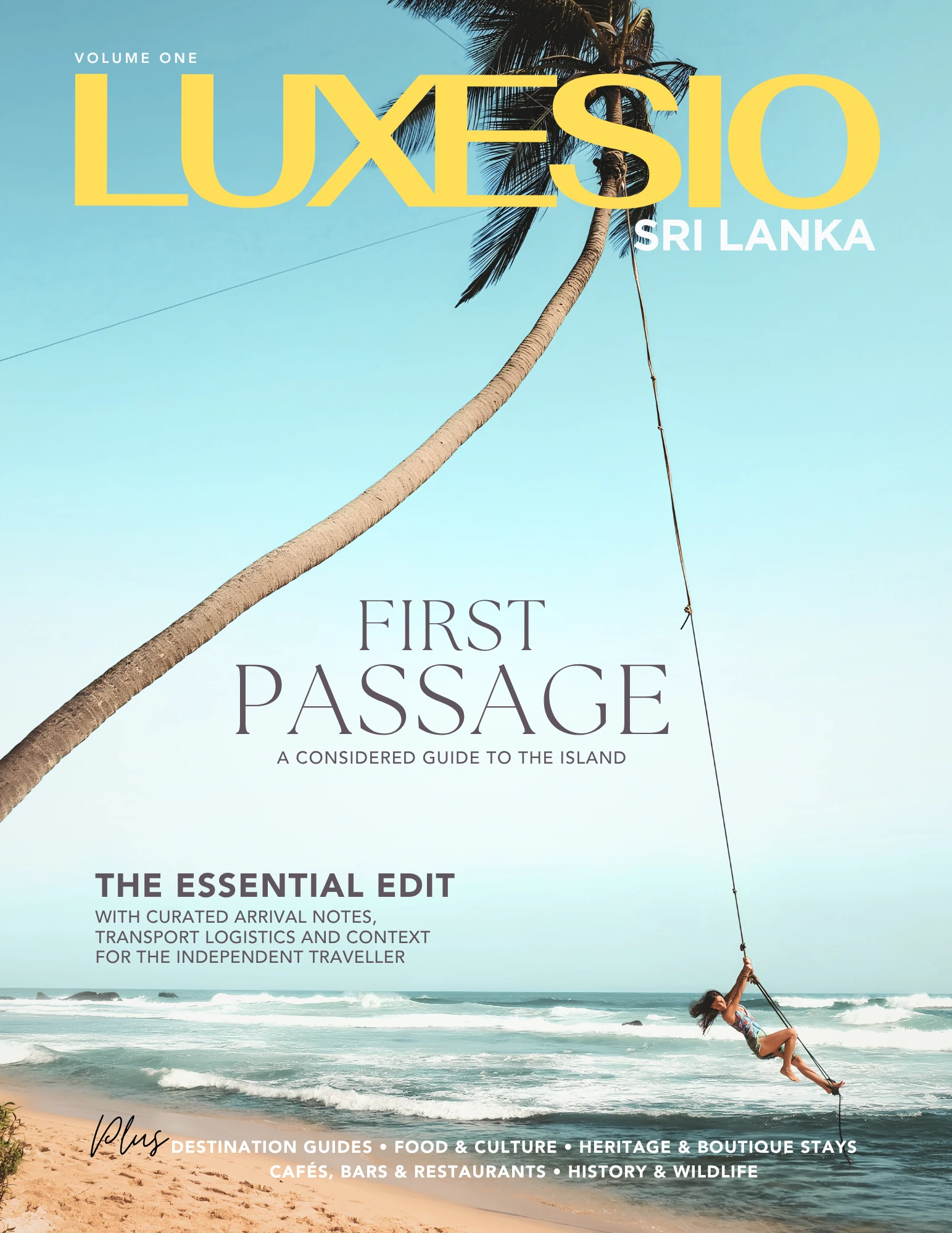
Sigiriya can be understood through history, but its atmosphere is defined by more than the rock itself. The approach through the gardens, the climb between terraces, the surrounding plains and its place within the wider Cultural Triangle all contribute to the destination's unique presence. For a more complete destination perspective, the LUXESIO magazine explores how to experience Sigiriya with context, pace and attention. Inside the edition, Sri Lanka's historic sites are placed within routes, stays and cultural frameworks, helping readers understand the island before they arrive.