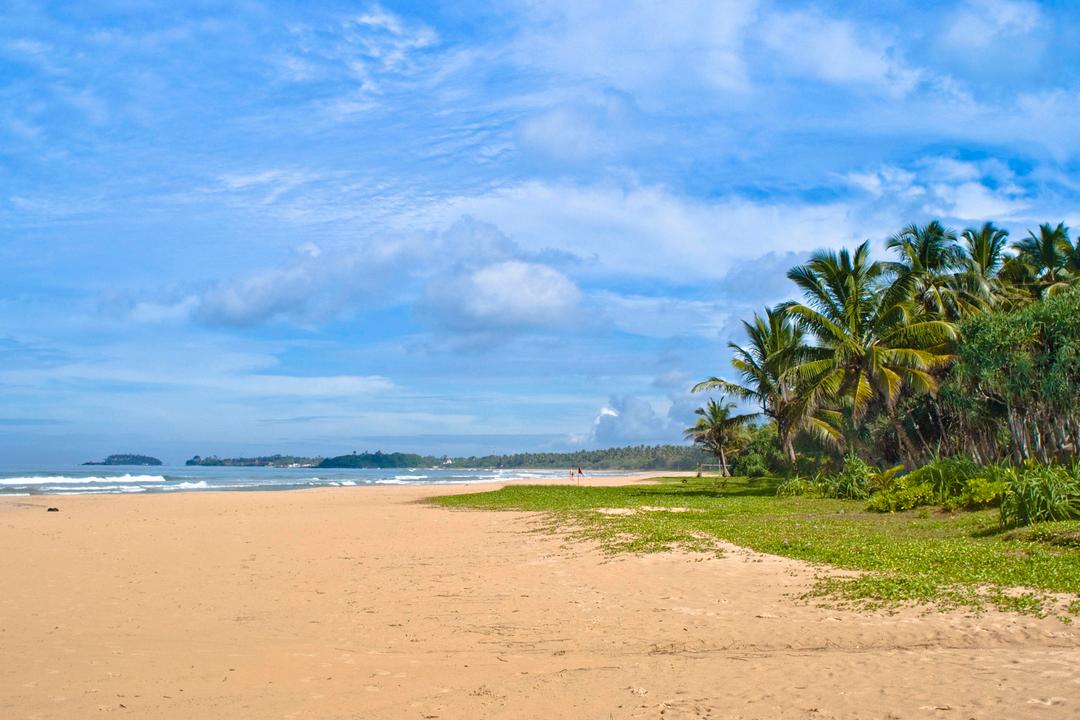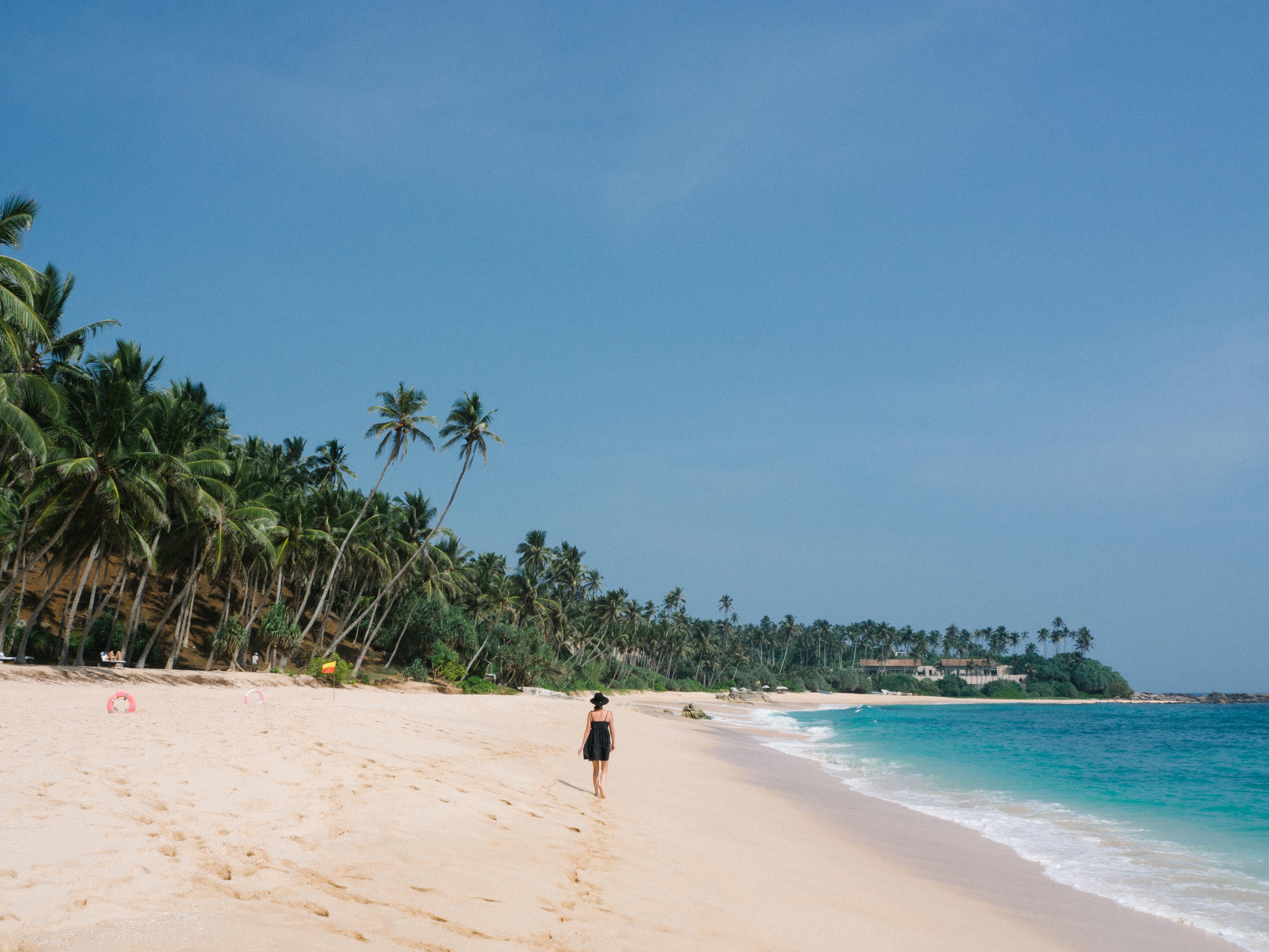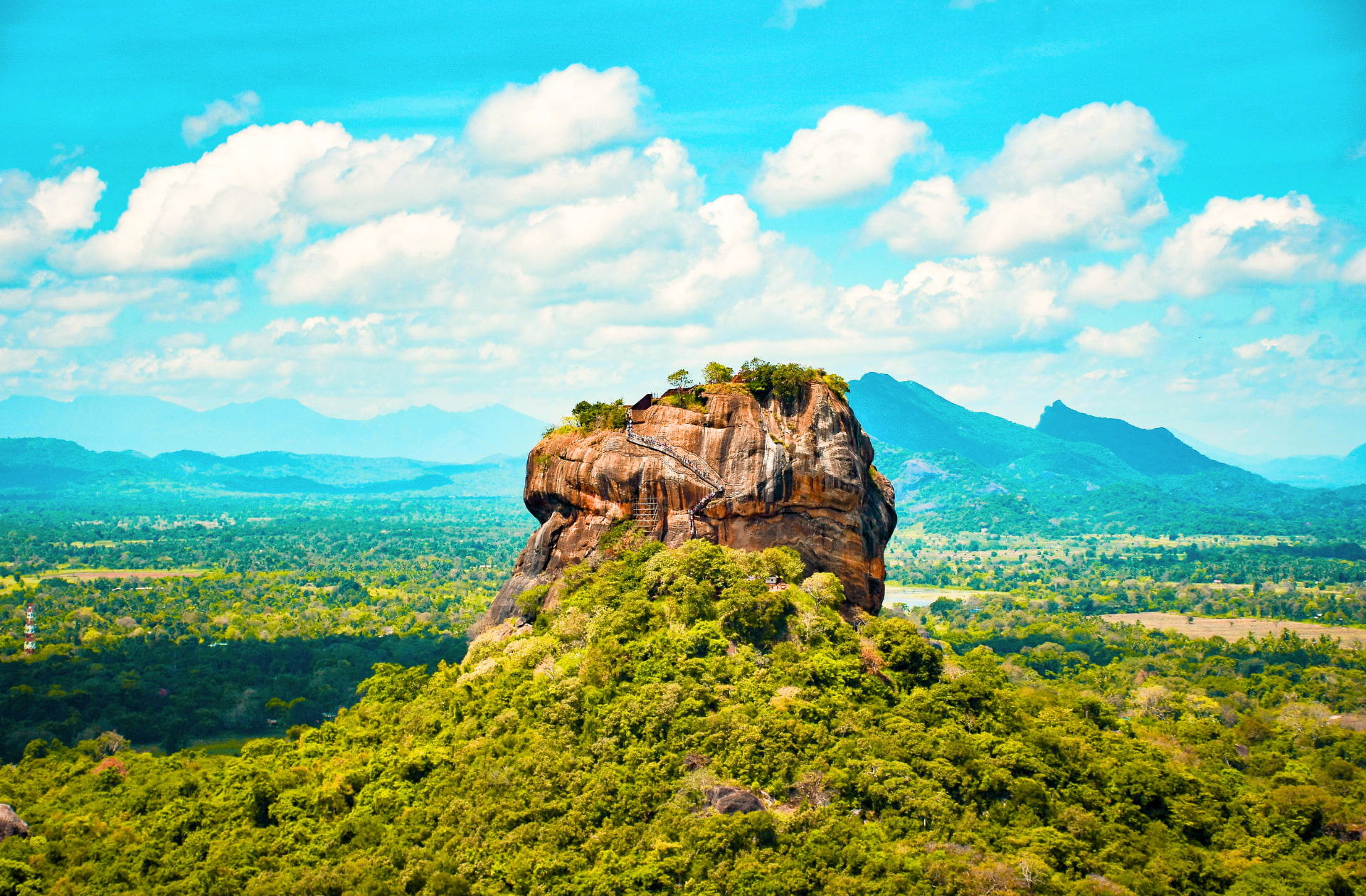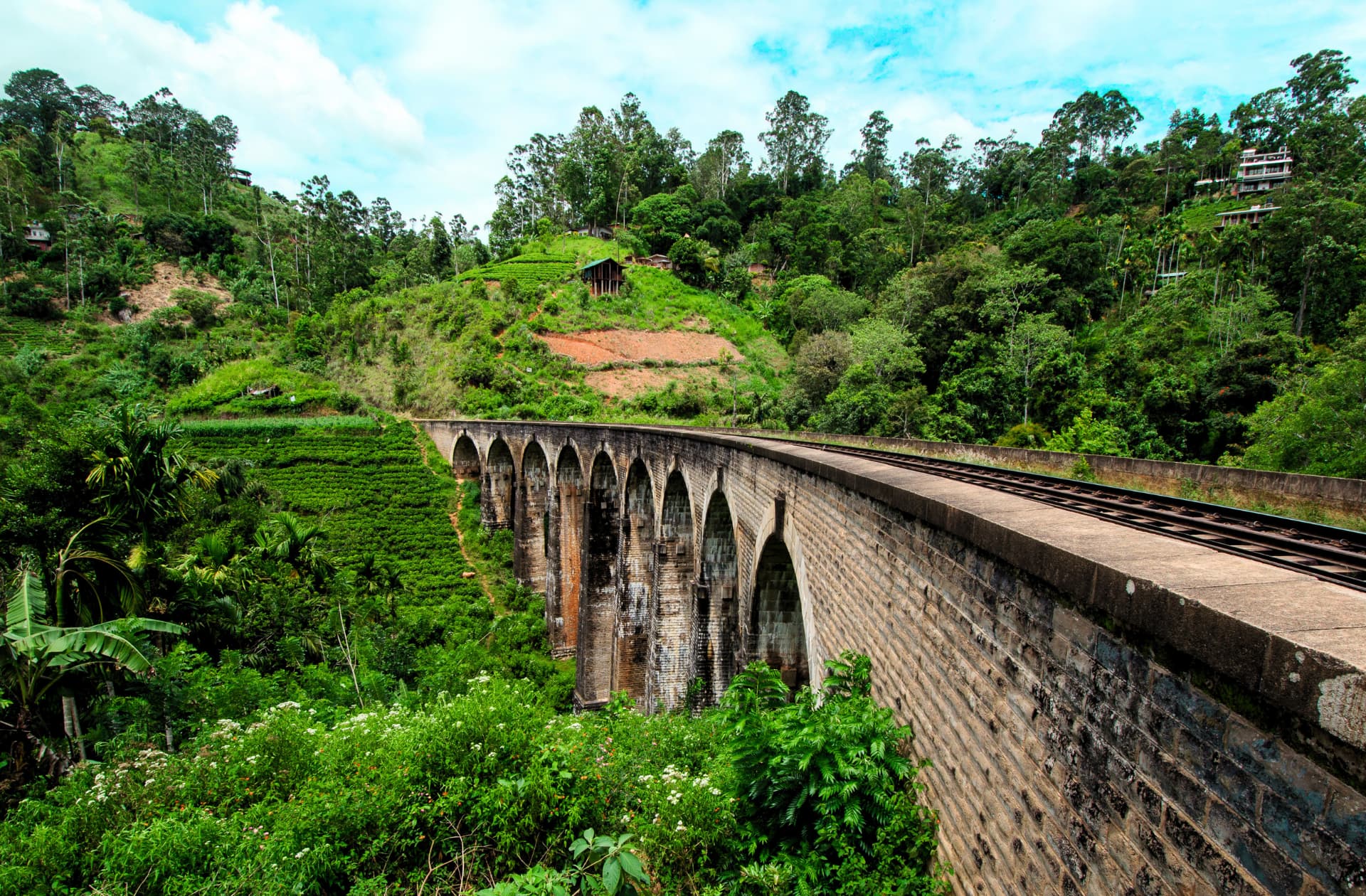


Most visitors encounter Bentota purely as a broad ribbon of golden sand where beachfront resorts face the breaking rollers of the Indian Ocean. Yet just metres behind the palm-lined peninsula lies an entirely separate ecological world: the Bentota Ganga (Bentara River), Sri Lanka's third-largest river system, whose tidal estuary winds inland through deep mangrove forests, quiet backwaters and family-cultivated spice islets.
Experiencing the river comes down to timing. By mid-morning, the widest lower reaches near the bridge buzz with water-skiing boats and wakeboarders launching from the resort jetties. At six o'clock in the morning, however, the estuary belongs entirely to the mist and the fishermen.
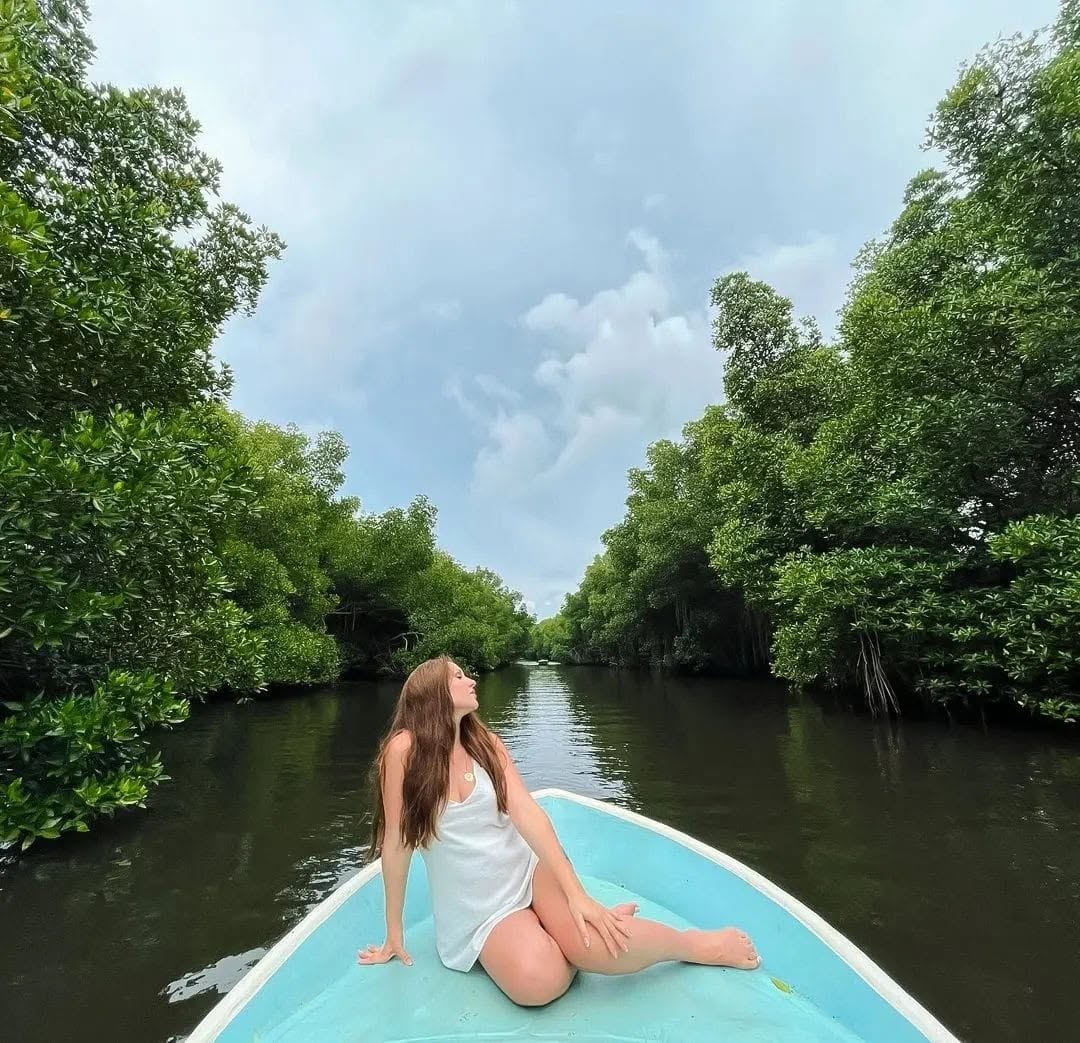
Inside the Mangrove Tunnels
A shallow-draft boat departing at first light encounters the river at its most atmospheric. As early sun filters through the palms and mist lifts off the dark, glass-calm surface, two-metre water monitor lizards slip silently off sun-warmed roots, while brahminy kites, white-bellied sea eagles and electric-blue kingfishers patrol the canopy overhead.
Several kilometres upstream from the river mouth, the main channel branches into narrow side creeks where tangled prop roots of red and black mangroves arch out of the brackish water. Here, the canopy closes overhead to form natural green tunnels completely sheltered from ocean winds. These dense root matrices act as the ecological nursery of the southwestern shore, filtering monsoon runoff from the interior hills while sheltering prawns, mud crabs and juvenile reef fish before they migrate out to the Indian Ocean.