Luxesio

Sri Lanka Travel Guide: Volume One | Read Now
LUXESIO
Sri Lanka, thoughtfully explained.
LUXESIO Sri Lanka Deluxe Edition
The Definitive Insider's Guide to Travelling Sri Lanka
Pre-order The Deluxe Edition
AN INDEPENDENT TRAVEL PUBLICATION
Covering places, culture, history, and design-led stays.
The 7 Wonders of Sri Lanka: Monolithic Fortresses and Cloud Forests
Heritage & Monuments

The 7 Wonders of Sri Lanka: Monolithic Fortresses and Cloud Forests

Granite fortresses, brick domes, stepped tanks and stone viaducts built across sixteen centuries of island history.

Sri Lanka’s builders drew on what the island offered: granite outcrops, river clay, shore coral and the seasonal force of two monsoons. Over some sixteen centuries Sinhalese kings, monastic orders and colonial engineers turned those materials into gravity-fed reservoirs that still irrigate dry-zone paddy, brick stupas that rise above the forest canopy and sea walls that face the open ocean. Seven of them are set out here.

Wonder 01 • Matale District

Sigiriya: The Fifth-Century Sky Citadel

Sigiriya rises 180 metres from the central dry zone, a sheer column of dark granite carrying the stepped foundations of the palace King Kashyapa built in the fifth century. Across the western approach lie the royal water gardens, laid out in strict symmetry. Beneath the paths, terracotta conduits carry water from elevated cisterns by gravity and natural pressure alone. After heavy monsoon rain the fountains at the foot of the rock still run. Halfway up the ascent the Mirror Wall, finished in lime plaster polished to a sheen, carries verses scratched into its surface by visitors over the centuries.
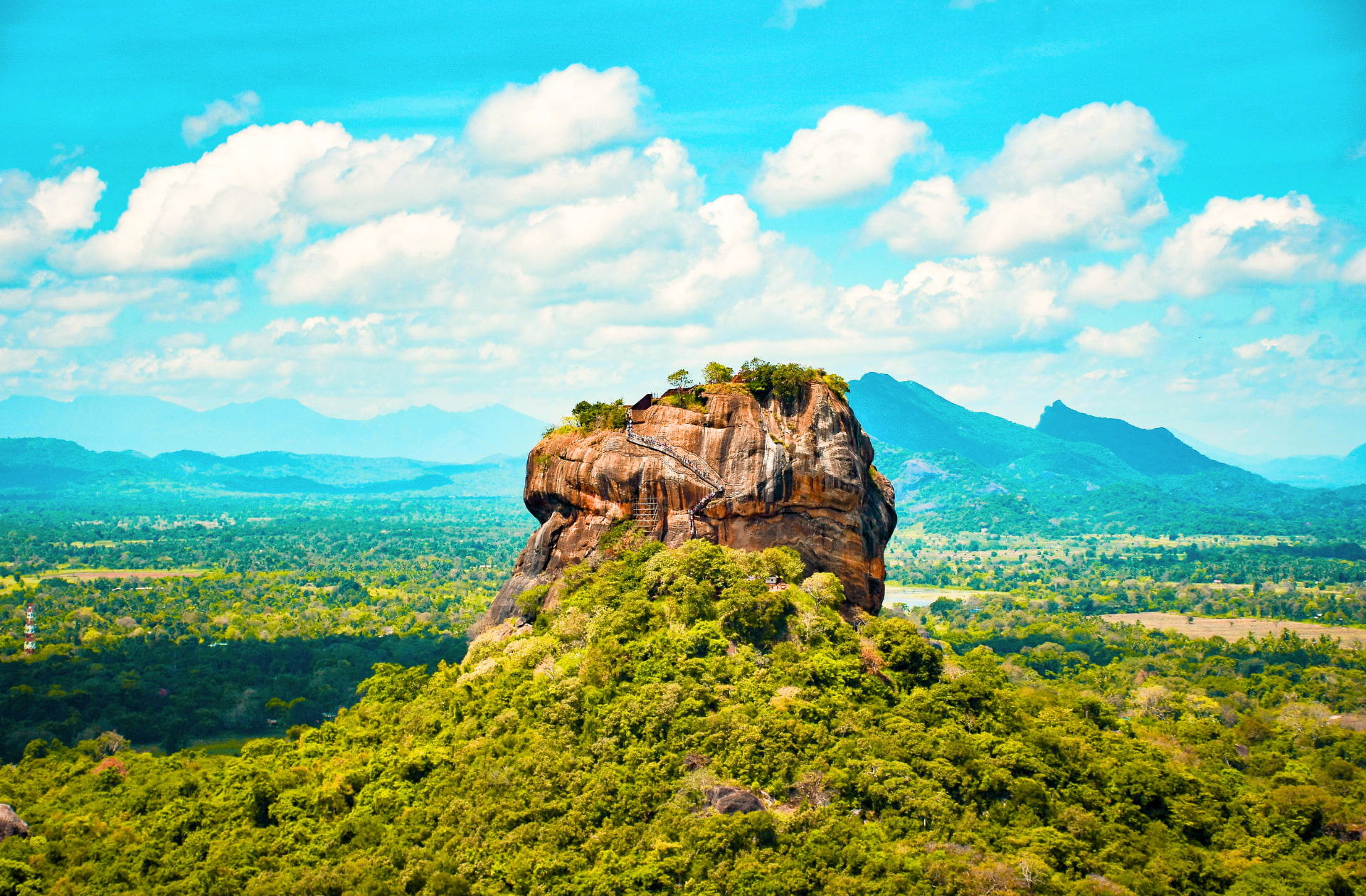
Sigiriya rock fortress above the royal water gardens
The granite column of Sigiriya rising above the fifth-century royal water gardens.

Wonder 02 • Anuradhapura Sacred City

Jetavanaramaya: A Dome of 93 Million Bricks

Begun in the late third century under King Mahasena, Jetavanaramaya anchors the monastic parkland of Anuradhapura. Accounts record its original height at 122 metres, a scale rivalled in the ancient world only by the Great Pyramids of Giza. To carry a mass estimated at more than a million tons, builders dug foundations nearly nine metres deep into bedrock before laying some 93 million baked clay bricks. Pilgrims dressed in white still circle the stone terrace with offerings of jasmine.

Wonder 03 • Polonnaruwa District

Parakrama Samudra: The Sea of Parakrama

The twelfth-century king Parakramabahu I is remembered for governing by the principle that no monsoon rain should reach the sea without first irrigating the land. Parakrama Samudra, the ‘Sea of Parakrama’, answers it at inland scale: five linked reservoirs held behind an earthen embankment some fourteen kilometres long. The reservoirs were graded so that overflow from one basin feeds the next; eight centuries later the channels still carry water to the paddy fields of the surrounding plain.
Wonder 04 • North Western Province

Yapahuwa: The Lion Staircase

Yapahuwa rose in the thirteenth century around a steep granite outcrop that briefly sheltered the Sacred Tooth Relic during a period of South Indian invasions. A ceremonial staircase flanked by carved lions climbs the rock toward the upper shrine platform. The treads are narrow and the pitch near-vertical; the steepness is commonly read as defensive as well as ceremonial, since anyone climbing it arrives out of formation and exposed.

Wonder 05 • North Central Province

Avukana: The Standing Buddha of Kala Wewa

Cut in the fifth century from a single granite cliff face beside the Kala Wewa reservoir, the standing Buddha of Avukana rises twelve metres. The pleats of the robe fall close and even, like draped cloth. Local guides point out that a drop of water falling from the tip of the nose would land between the feet.

Wonder 06 • Southern Coast

Galle Fort: The Ocean Bastions

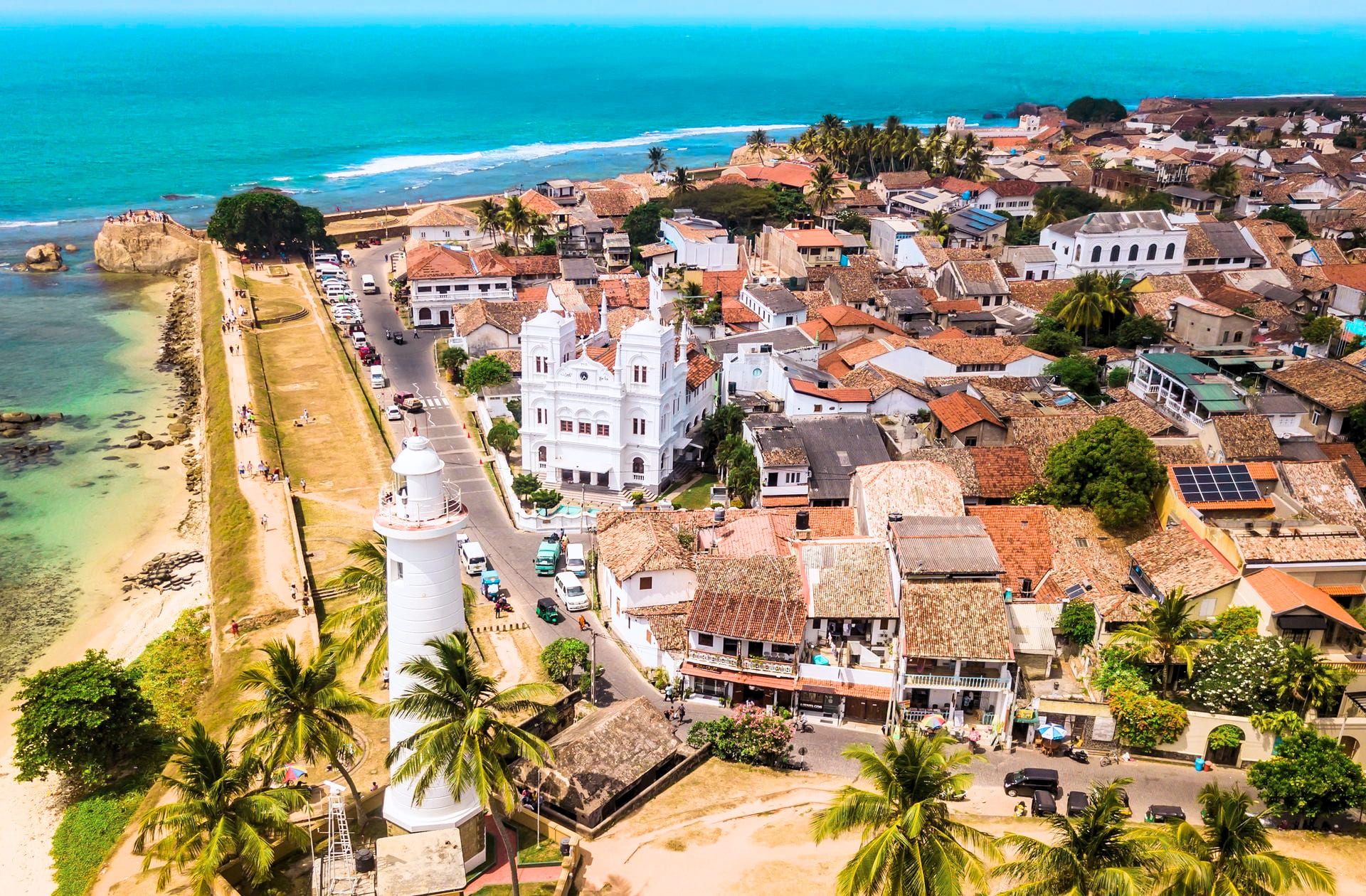
Galle Fort began as a Portuguese outpost in the late sixteenth century. After taking the port in 1640 the Dutch East India Company rebuilt it from 1649 in granite and coral before the British later inherited the walls. The ramparts face open ocean on three sides and have stood through four centuries of monsoon swell and the 2004 tsunami. Inside, a seventeenth-century street grid of clay-tiled merchant houses, churches and courtyards remains a working neighbourhood.

Galle Fort ramparts facing the Indian Ocean
Coral and granite bastions facing the Indian Ocean along Galle Fort’s southern perimeter.

Wonder 07 • Ella Highlands

The Nine Arch Bridge: Masonry above the Tea

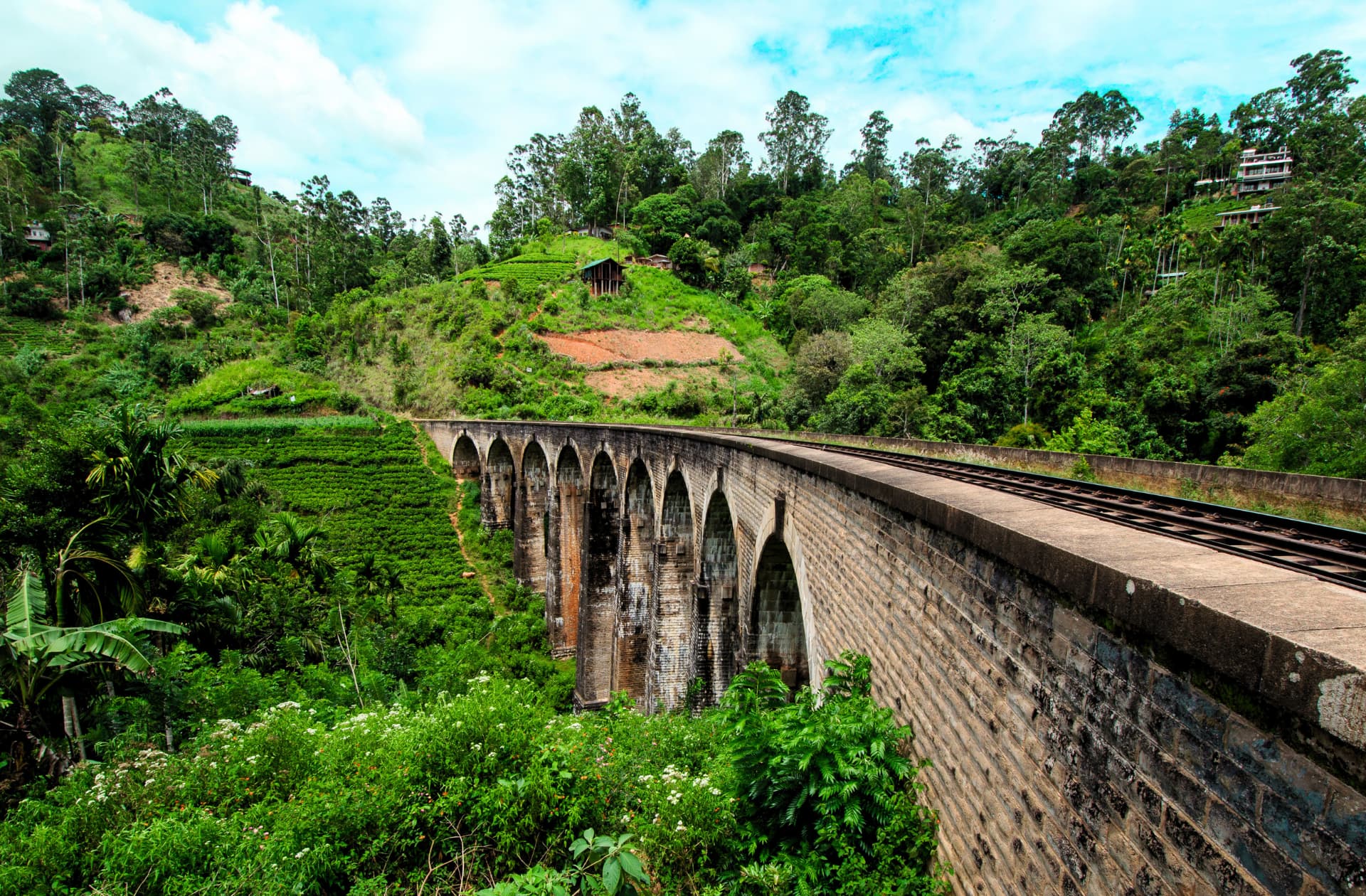
Between Ella and Demodara stations, the Nine Arch Bridge carries the Badulla line across a deep valley on nine arches of stone, brick and cement. Local accounts hold that steel girders meant for the gorge were diverted to the First World War effort, leaving the Ceylonese master builder P. K. Appuhami and colonial engineers to span the gap in masonry. The viaduct is about 91 metres long and 24 metres high; trains still cross it through the day above the tea slopes.

Nine Arch Bridge among the tea slopes of Ella
Tea slopes and forested escarpment around the stone railway viaduct in Ella.

“Not a single drop of rain should reach the ocean without first serving the land.”
– Attributed to King Parakramabahu I

Travellers linking several of these landmarks into one route will find drive times, seasonal monsoon notes and curated places to stay in the complimentary LUXESIO Volume One.

Join The Readership

Sri Lanka, Thoughtfully Explained

Plan your Sri Lankan journey with our collector’s digital edition, featuring curated regional routes, architectural stays and private island dispatches delivered directly to your inbox.

More From LUXESIO

Save to list