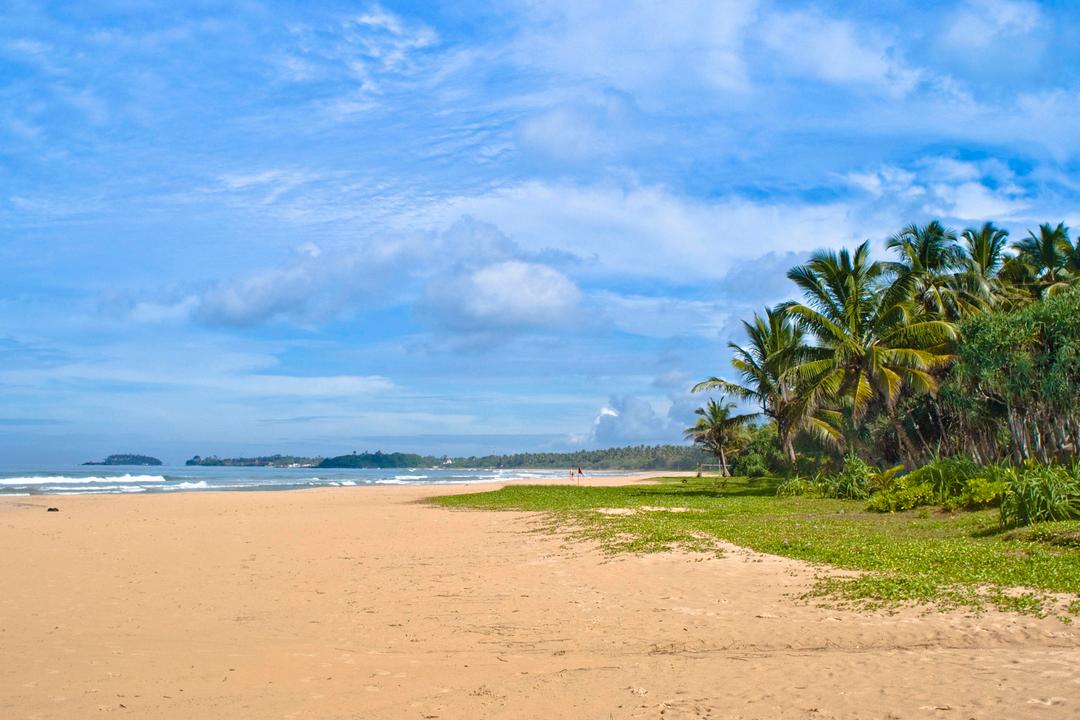

Unlike single-season island destinations, Sri Lanka offers clean, rideable surf 365 days a year thanks to its dual monsoon system. From November through April, the northeast monsoon grooming the island sends crisp offshore morning winds across the southwest and southern shores, lighting up beach breaks, limestone ledges and horseshoe coves from Hikkaduwa down to Hiriketiya. When May arrives and the southwest monsoon brings onshore winds to the south, the entire surf compass flips to the arid eastern coastline, where long right-hand sand points around Arugam Bay fire uninterrupted through September.
These six beaches represent the primary wave corridors across both coasts.
01 • Hiriketiya, South Coast (November–April)
An Enclosed Horseshoe Cove
Tucked behind Dickwella on the deep southern coast, Hiriketiya is a five-hundred-metre horseshoe inlet wrapped in dense jungle headlands. Because the high green ridges shield the water from crosswinds, the bay often remains clean and surfable when more exposed stretches of shoreline are blown out. The wave mechanics split naturally in two: a mellow, rolling sandbar wave in the centre of the cove accommodates beginners on the sand, while an energetic left-hand point break peels off the western rock shelf for experienced riders pushing onto the reef.
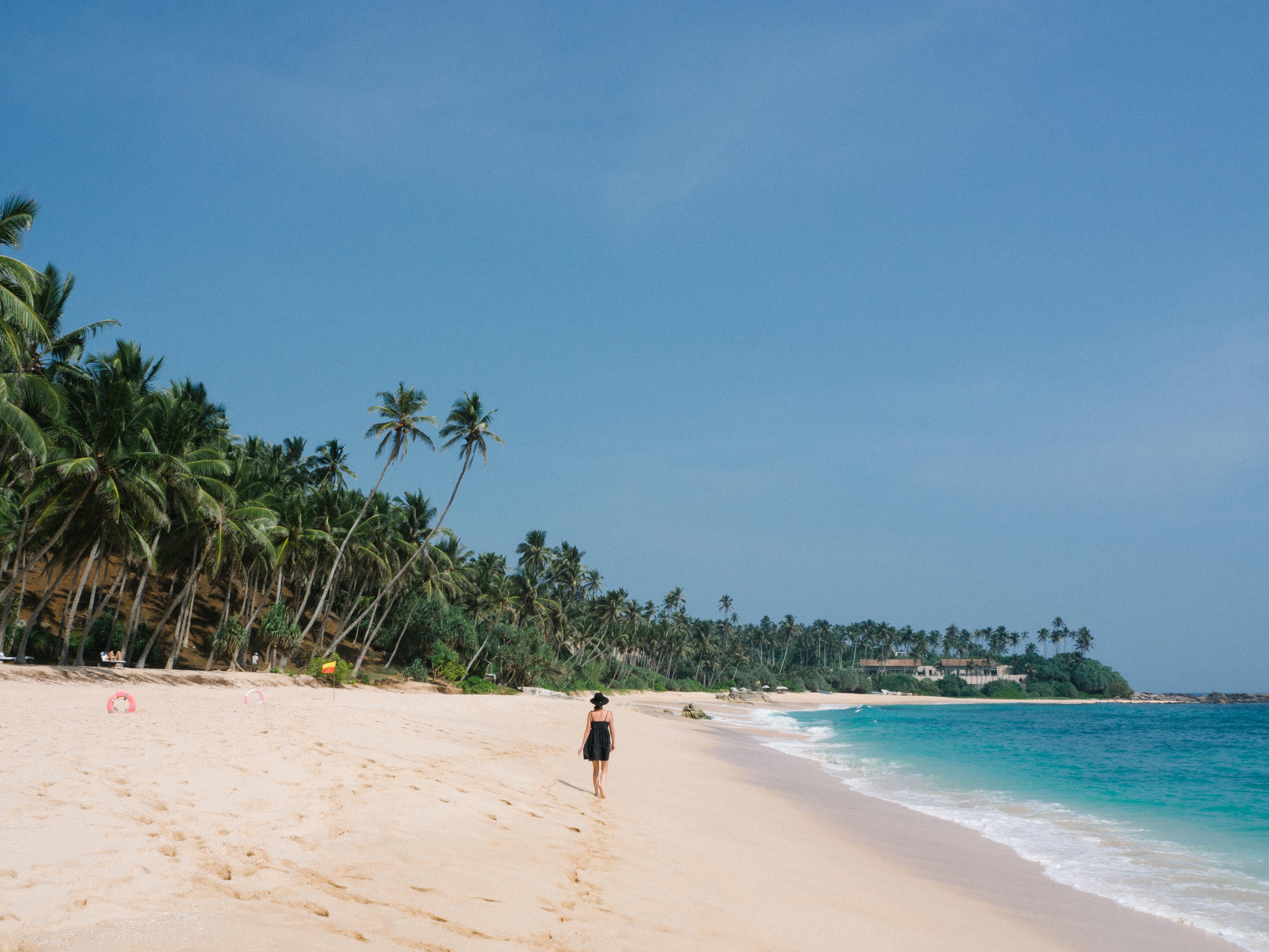
02 • Weligama, South Coast (November–April)
A Two-Kilometre Bay Shared with Outrigger Canoes
Known across the Indian Ocean as Sri Lanka's primary longboarding and progression foundation, Weligama is a sweeping, two-kilometre sandy bay sheltered by outer headlands. Free of sharp coral hazards, the wide sand bottom absorbs southern groundswells to produce gentle, evenly spaced peaks from November through April. At sunrise and sunset, surfers share the glassy line-up with brightly painted wooden outrigger canoes (oruva) returning to the shore.
03 • Midigama, South Coast (November–April)
A Deep-Water Reef Beside the Shoreline Railway
Just west of Weligama, the coastline transitions from forgiving sandbars to exposed limestone and coral reefs. Midigama's flagship break, known locally as Lazy Left, sits steps from the southern railway line where highland-to-coast trains pass right behind the palm line. Breaking over a deep-water reef shelf, Lazy Left produces a slower, predictable left-hand wall that allows riders to deliberately set their line, providing one of the most reliable winter reef sessions on the island.